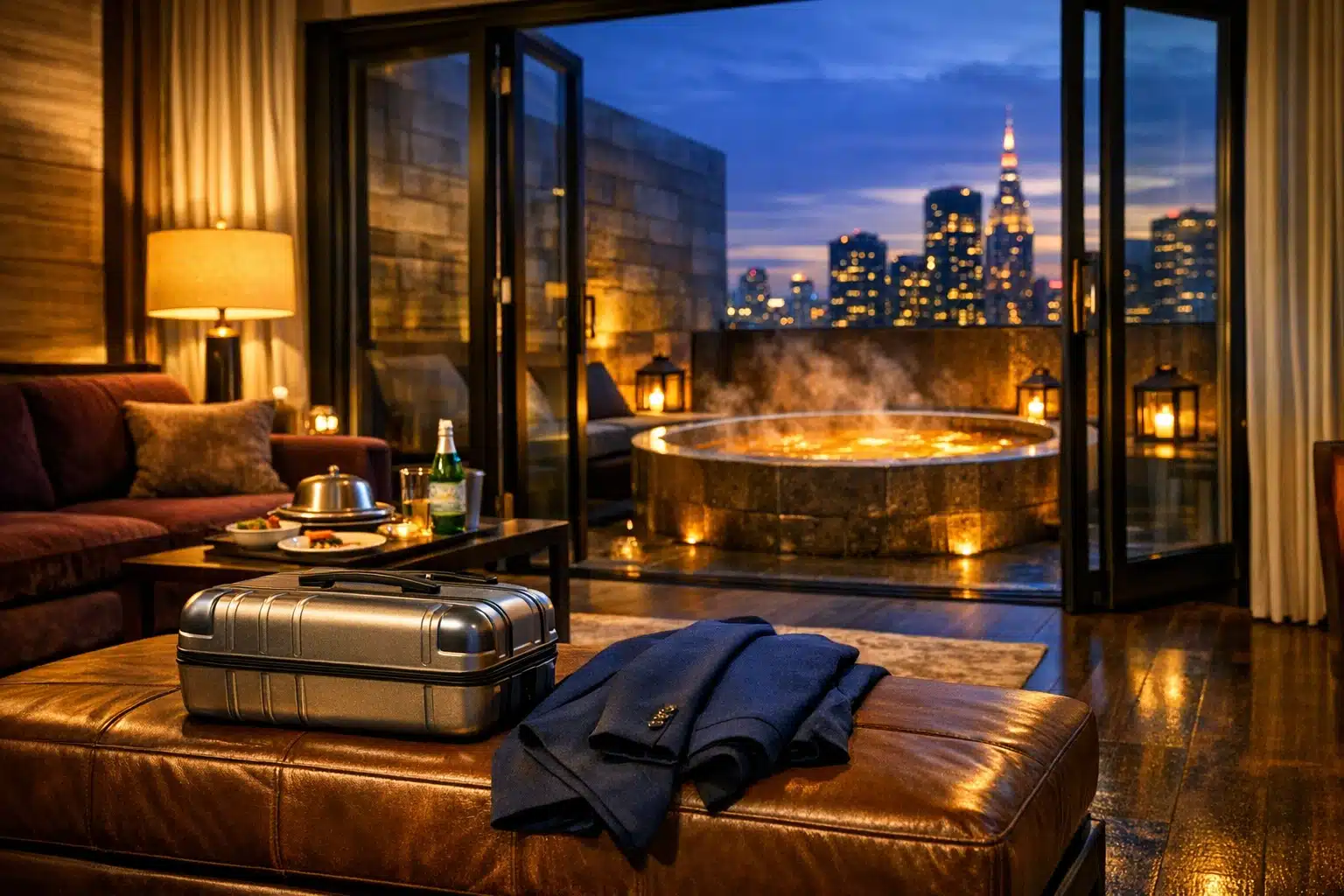
 Artificially generated image
 Luxury Hotel Rooms with Hot Tubs: Are They Worth It?
A luxury suite with a private jacuzzi can turn an ordinary night away into something slower, quieter, and noticeably more personal. For couples, busy professionals, and anyone celebrating a milestone, the appeal lies in comfort that feels immediate rather than decorative. Yet the higher rate raises a fair question: are these rooms truly worth the premium, or are they simply polished upgrades with clever lighting? This guide breaks down what you actually get, where the value shows up, and how to choose a stay that matches your budget, occasion, and expectations.
Explore the benefits of luxury hotel rooms with hot tubs, from privacy and relaxation to booking tips and suite comparisons.
Outline:
• What separates a genuine luxury stay from a standard room with a premium label
• How privacy, quiet, and warm water shape the guest experience
• The main room and suite categories travelers usually compare
• Booking tactics, cost checks, and details worth confirming before payment
• A practical framework for deciding when the upgrade earns its price
What Makes a Luxury Stay Feel Truly Luxurious
The phrase luxury stay gets used so freely that it can lose meaning, especially in hotel listings where almost every upgraded room is framed as exceptional. In reality, a luxury hotel room with a hot tub earns that label through a combination of design, privacy, space, and service rather than one standout feature. A jetted tub alone does not create a premium experience if the room feels cramped, the bathroom lacks ventilation, or the soundproofing allows hallway noise to drift in at midnight. What travelers are usually paying for is the complete atmosphere: generous layout, better materials, thoughtful lighting, a calmer setting, and service that reduces friction from check-in to checkout.
In many well-designed properties, the private jacuzzi is only one piece of the appeal. The room may also include a separate seating area, higher-quality bedding, larger windows, a rain shower, a better minibar selection, and small but meaningful details such as dimmable lights or bath products that feel chosen rather than generic. Some hotels place the tub beside panoramic windows, while others tuck it into a spa-style bathroom with stone finishes and warmer textures. That distinction matters. A tub placed for visual impact creates a very different mood from one added as an afterthought in a standard bathroom footprint.
Travelers can use a simple lens when judging whether a room is truly luxurious:
• Space: Is there enough room to move comfortably, unpack, and relax without feeling boxed in?
• Privacy: Does the room offer separation from neighboring guests, elevators, and public areas?
• Design quality: Are the materials durable and refined, or merely glossy in online photos?
• Function: Does the hot tub look easy to use, well maintained, and sensibly placed?
• Service: Are requests handled quickly, and are amenities clearly explained?
Examples help here. An urban boutique hotel may offer a sleek suite with a compact indoor spa tub, strong soundproofing, and late checkout, which suits a short romantic break. A resort property may provide a larger terrace tub, outdoor seating, and more scenic privacy, making the room itself part of the vacation. Both can be luxurious, but they serve different moods. The core lesson is simple: true luxury is not about size alone, and it is not about branding alone either. It is about how completely the room supports rest, ease, and a sense of being briefly removed from routine.
Privacy, Relaxation, and the Real Appeal of a Private Jacuzzi
Privacy is one of the strongest reasons travelers choose a hotel room with a hot tub instead of relying on a shared spa, and the difference is bigger than it first appears. A communal wellness area can be beautiful, but it comes with schedules, dress codes, other guests, and the low-level social awareness that never fully disappears in public settings. A private jacuzzi changes that rhythm. You can soak early in the morning without leaving the room, settle in after dinner without timing your visit around closing hours, and step out whenever you like without turning the experience into an event. That convenience often becomes the hidden luxury people remember most.
The relaxation side is equally practical. Warm water can help ease ordinary travel fatigue, especially after a long drive, a flight, or a full day of walking through a city. It may encourage muscles to loosen and create a mental shift from movement to stillness, though it should not be treated as a medical solution. What matters in a hospitality context is that the body tends to read warm water as a signal to slow down. In a good suite, that physical cue is supported by softer lighting, better temperature control, and the simple comfort of knowing no one is waiting for your turn.
The private setting also changes how different travelers use the room:
• Couples often value the uninterrupted time and the feeling that the room is part of the occasion, not just a place to sleep.
• Solo travelers may enjoy the sense of retreat, especially after a demanding work trip or a packed sightseeing schedule.
• Friends on a celebratory weekend sometimes appreciate a suite that feels social without requiring them to linger in public areas.
• Guests on short stays can get more immediate use from an in-room tub than from a spa that requires appointments or walking across the property.
There is a softer, almost cinematic aspect as well. A private jacuzzi can make a stay feel unhurried in a way that is difficult to manufacture elsewhere. Steam rises, city lights blur against the window, and the room stops functioning as a stopover and starts feeling like a small sanctuary. That said, privacy only adds value when it is genuine. Thin curtains, overlooked terraces, or noisy neighboring rooms can flatten the experience quickly. Before paying a premium, guests should consider whether the room actually delivers seclusion, because that is often the feature doing the heaviest lifting in the final perception of value.
Room Types Compared: Deluxe Rooms, Junior Suites, and Full Hotel Suites
One of the easiest ways to overpay for a luxury stay is to assume that every upgraded category delivers a similar experience. Hotels use labels like deluxe, executive, junior suite, spa suite, and presidential suite with different internal standards, so comparison matters. A deluxe room may simply offer a better view, a higher floor, or a larger bathroom than the base category. A junior suite usually introduces a more open layout with a seating area, though the sleeping and living spaces may still share one room. A full suite commonly provides a separate living area and more privacy, which can matter more than square footage alone when the goal is to unwind rather than just admire the decor.
When a hot tub is added to the mix, the distinctions become even more important. Some deluxe rooms include a jetted tub but not much extra space, which can work well for a one-night occasion but feel less impressive over a long weekend. A junior suite may balance comfort and price by pairing a spa bath with a lounge area, making the room more usable throughout the day. A one-bedroom suite tends to feel more complete, especially for guests who want to eat in, read, work, or host room service without sitting on the bed. At the upper end, penthouses and villas may add outdoor soaking areas, terraces, or better views, but their premiums can rise sharply.
As a rough market pattern, moving from a standard room to a junior suite in many city hotels can add roughly 25 to 60 percent to the nightly rate, while a full suite may cost significantly more during weekends, holidays, or peak season. The hot tub feature can raise the rate further, particularly when it is paired with a terrace, a view, or strong demand from couples celebrating an event. This does not mean the higher category is poor value. It means the room should be matched to how you plan to use it.
A helpful comparison framework looks like this:
• Deluxe room with hot tub: best for short stays and travelers focused on the tub itself
• Junior suite with hot tub: strong middle ground for comfort, photos, and flexibility
• One-bedroom suite: ideal when privacy within the room matters as much as the tub
• Terrace or villa category: best when scenery and outdoor space are central to the trip
The smartest comparison is not between labels but between layouts, actual floor plans, and real photographs. A well-priced junior suite can outperform a poorly designed premium suite, while an ordinary-looking full suite may deliver far better comfort over two or three nights. In other words, room categories matter, but usable space matters more.
Booking Smart: Questions, Costs, and Details That Shape the Experience
Booking a hotel suite with a private jacuzzi is where excitement can cloud judgment, because the room is often sold through mood rather than specifics. Beautiful images, soft robes, and carefully staged lighting can make two properties look similar even when the real experience differs quite a lot. This is why the most useful booking habit is to move from admiration to verification. Read the room description slowly. Look for exact wording such as indoor jetted tub, outdoor hot tub, whirlpool bath, heated plunge pool, or oversized soaking tub. These are not interchangeable, and a soaking tub without jets can be lovely while still delivering a different experience from what many travelers imagine when they read hot tub.
Photos deserve a second, more skeptical look. Wide-angle lenses can exaggerate floor space, and a terrace can seem secluded until you notice neighboring balconies three feet away. Guest reviews are valuable when they mention specific details: water temperature, cleanliness, noise levels, ease of use, maintenance issues, or whether the tub took a long time to fill. Reviews are especially helpful for older properties where a once-impressive spa feature may now feel dated.
Before confirming the reservation, it helps to check the following:
• Is the tub private to the room, or is it a semi-private feature attached to a shared spa floor?
• Is the tub indoors or outdoors, and is outdoor heating reliable in cooler weather?
• Does the hotel charge resort fees, spa access fees, or service fees beyond the room rate?
• Are there time limits, maintenance closures, or instructions for requesting preparation?
• Is late checkout available, which can make a premium room more usable?
Price comparison also matters. Sometimes the difference between a base room and a jacuzzi suite is modest on a weekday but much steeper on a Saturday or holiday. In shoulder season, travelers occasionally find better value by upgrading at check-in or booking packages that include breakfast or dining credit. On the other hand, celebratory weekends can push premium rooms into price territory where a different hotel, or even a resort outside the city center, delivers far more space for similar money.
Calling the property directly can still be worthwhile, not because it always guarantees a lower rate, but because it can clarify room location, privacy, and recent renovations in ways a booking page cannot. A five-minute conversation may reveal whether the suite is near the elevator, whether the tub faces a parking lot rather than a skyline, or whether the room shown in photos represents the exact category. Those details do not sound glamorous, but they often determine whether the stay feels indulgent or merely expensive.
Who Should Upgrade and When the Premium Really Makes Sense
The value of a luxury hotel room with a hot tub depends less on the room itself than on the kind of trip you are taking. For an anniversary, proposal weekend, birthday escape, or honeymoon stop, the premium often makes emotional sense because the room becomes part of the event. You are not simply buying extra square footage; you are buying privacy, mood, and a setting that helps the occasion feel distinct from everyday life. In those cases, a well-chosen suite can deliver exactly what travelers hope for: fewer interruptions, more time together, and a memory tied to the place rather than just the destination.
The upgrade can also make practical sense for travelers who expect to spend meaningful time in the room. A rainy weekend, a winter city break, a post-conference recovery night, or a short stay after a long flight can all make an in-room jacuzzi feel especially worthwhile. If you are likely to return late, order dinner, soak, and sleep in, the room does more work for you than a premium feature you never use. By contrast, if the itinerary is packed from dawn to midnight and the hotel is mainly a place to shower and collapse, a standard room or a smaller upgrade may be the smarter choice.
There are also situations where the premium is less convincing. Families with young children may get more value from connected rooms or a larger standard suite without a spa feature. Budget-conscious travelers might prefer to put the difference toward a better location, dining, or an extra night. Some guests are drawn to the idea of a private jacuzzi but discover that what they actually care about is quiet, a view, or a great bed. In that case, another room category may satisfy the real need more effectively.
A useful decision checklist is simple:
• Will you spend enough time in the room to enjoy the feature more than once?
• Is privacy a major goal of the trip?
• Does the room include other meaningful upgrades besides the tub?
• Is the rate difference comfortable within your travel budget?
• Would a better location or longer stay create more value for you?
For couples planning a special night, professionals needing a reset after long days, and travelers who genuinely enjoy slow time indoors, the upgrade can absolutely be worth it when the room is well designed and honestly represented. For everyone else, the best approach is to be clear about what you want the hotel to do for your trip. Luxury is most satisfying when it solves a real desire, not when it merely photographs well. Choose with that in mind, and the decision becomes much easier.